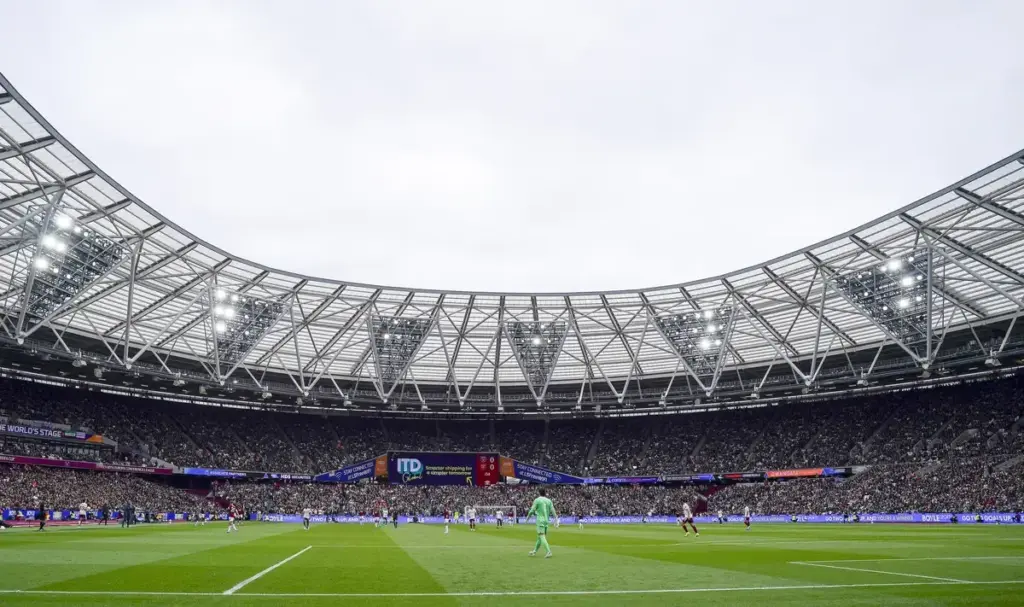

West Ham buying London Stadium has an obvious appeal: greater control over the place supporters call home, with the possibility of making it work better for football.
Sadiq Khan’s willingness to consider a proposal has revived that discussion. Yet the financial case deserves as much scrutiny as the promise of better views, a stronger atmosphere and more commercial freedom.
Our latest London Stadium purchase update covered an unnamed club source’s concerns about running costs and future investment.
The question for West Ham is whether a deal could deliver enough benefits to justify those responsibilities. Ownership alone would settle very little about how the ground changes.
West Ham already have a valuable starting position
City AM reports that West Ham currently pay a little over £2million annually under their long-term stadium arrangement.
That gives the club an important benchmark when assessing any purchase.
A buyer would need to compare the existing agreement with the complete cost of a proposed deal: funding the acquisition, maintaining the building, running events and paying for improvements.
The sale price would be only the opening line of that calculation.
Even a nominal purchase price could leave substantial spending ahead. Equally, a more expensive package might offer greater value if it included worthwhile commercial rights and manageable obligations.
For supporters, the useful question is what West Ham would gain for the extra money committed, and how those gains would improve their experience.
What the £19m London Stadium figure actually means
In July, The Standard reported that stadium chair Lyn Garner expected the 2025/26 accounts to show an operating loss of around £19million.
That figure concerns the stadium operation. It should not be presented as West Ham’s own annual loss or an established price for buying the venue.
It also cannot simply be carried forward as the precise cost of a hypothetical takeover.
A different agreement could change the income available, the responsibilities transferred and how the stadium operates. Assessing that would require detailed terms and financial forecasts.
However, the figure shows why the financial position needs careful examination. Any proposal should explain how recurring expenses would be funded, including during less profitable seasons.
Our earlier coverage of the stadium’s financial position provides the background to that debate.
Commercial control would need to produce a return
The attraction of ownership includes the possibility of coordinating football, sponsorship, hospitality and other events more effectively.
Those opportunities would depend on the rights acquired and existing agreements. They should be tested individually before anyone assumes a takeover would generate a major windfall.
A naming-rights deal, for example, would need a willing sponsor and an acceptable price. Hospitality improvements would require investment and sufficient demand.
Concert revenue would need to be assessed alongside staging costs, scheduling requirements and the effect on the football calendar.
Our view is that supporters should judge a proposal by the additional income it could realistically retain after expenses.
A larger revenue figure would mean little if costs rose faster. The strongest business case would explain which activities become more profitable, why ownership enables that improvement and how long the investment takes to repay.
Athletics makes redevelopment a separate challenge
City Hall’s published decision documents record West Ham’s 99-year concession beginning in 2016 and a 50-year concession agreed with UK Athletics in 2013.
Any redevelopment proposal would therefore need to explain how athletics commitments were accommodated or changed by agreement.
A purchase announcement would leave plenty for supporters to establish: which alterations were feasible, what approvals they required, how much they cost and when they could happen.
Moving seats closer to the pitch is an understandable ambition. Delivering a better view for particular sections, while preserving access and operating the venue, requires a worked-through design.
Fans deserve drawings, funding commitments and realistic delivery stages. They should also know whether construction would affect capacity, season-ticket locations or the ability to play home matches.
Those details would reveal far more about the football benefit than ownership changing hands.
The funding plan should also distinguish everyday upkeep from major building work. Cleaning, staffing and repairs keep a venue functioning; rebuilding stands or changing seating arrangements involves a different scale of commitment.
A proposal could look affordable in its first season while leaving larger projects completely unfunded. Supporters should therefore expect a timetable for investment, with responsibility for overruns made clear. Otherwise, the promise of a transformed home could remain dependent on money being found several years later.
Khan’s invitation comes with a public-interest test
City AM’s account of Khan’s letter makes his conditions clear: a credible proposal must offer taxpayer value and protect the venue’s wider benefits.
That leaves both sides needing a workable agreement.
West Ham would want sufficient commercial opportunity and control to justify their spending. City Hall would need to explain why the arrangement offered a better outcome for Londoners.
Hammers News’ unnamed source suggested additional land or property could help make a transaction attractive, while raising concerns about future capital expenditure.
That is a reported negotiating perspective. The article does not establish an agreed property package, a formal bid or a public decision by West Ham’s board.
Any wider package would also need its own valuation and clear explanation of who benefits.
What West Ham supporters should demand
Our assessment is that ownership could be worth pursuing if it came with a credible improvement programme and sustainable funding.
Supporters should ask who would own the stadium asset, where commercial profits would go and which organisation would meet future losses.
They should also ask how stadium spending would sit alongside the club’s football budget.
Those answers matter particularly if a separate company holds the ground. Shared ownership would not, by itself, explain the financial relationship with the team.
A convincing proposal would set out benefits for matchgoing fans, the cost of delivering them and protection against optimistic income forecasts.
West Ham should keep exploring ways to improve their home. The strongest offer would connect every major commitment to a clear, funded benefit that supporters could understand and measure.




Comments.
Loading comments…