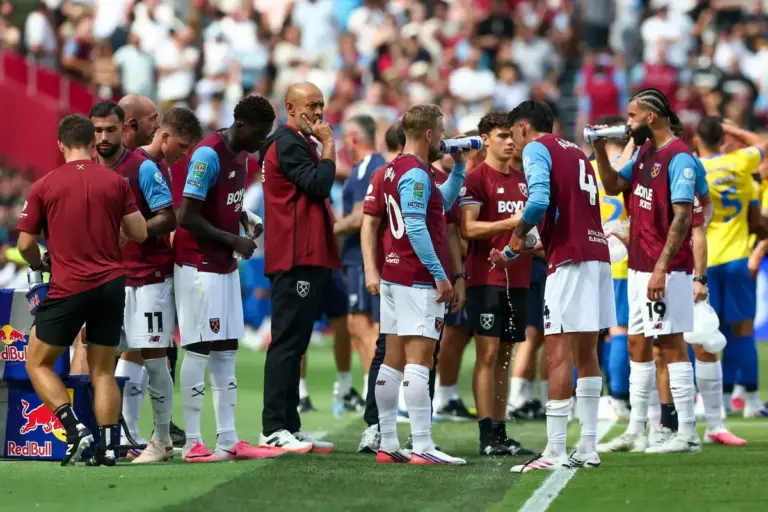

The Premier League betting odds on West Ham being relegated were 4/5 in February. Not at the start of the season. Not after a bad run of three games.
In February, with seventeen matches played and presumably enough evidence about what this squad was and was not capable of, the market had the Hammers as odds-on to go down.
That is not a fringe opinion from one bookmaker on a quiet afternoon. That is the collective view of every serious money in the market, distilled into a price, saying: this club is more likely to be relegated than not. Most West Ham fans at that point were still talking about the January window and what signings might turn it around.
The market had already moved on.
BoyleSports and every other platform running those Premier League betting odds markets had been reading the same data all season. Three managers. Lopetegui out before the campaign was three months old. Graham Potter left in September after one win in five. Nuno came in and briefly steadying things before three straight defeats against Brentford, Arsenal and Newcastle dumped them back into the bottom three.
A goal difference of minus twenty-two. Sixty-two goals conceded in thirty-seven matches. The third-worst defensive record in the division.
None of that was hidden information. All of it was sitting in the open, being priced into the market every week, being ignored by a significant chunk of the fanbase who kept pointing at individual performances and insisting the numbers did not tell the whole story.
What the Numbers Were Actually Saying
The goal difference is the number that should have ended the debate early. Minus twenty-two going into the final day is not bad luck. It is not a few games where the xG was against you. It is a season-long pattern of shipping goals in volume, which is what happens when a defensive structure is not working and has not been working for months.
The 3-0 defeat to Brentford in May, when West Ham hit the woodwork four times and still lost by three, was described by some as desperately unlucky. The market did not see it that way.
Relegation odds shortened after that game because the underlying performance metrics, goals conceded, defensive organisation, and clean sheet rate all pointed to a team that would continue shipping goals regardless of how many posts they rattled.
The supercomputer had West Ham at 85.91% likely to go down on the final day. They went down. They won their game, beating Leeds 3-0, and it made no difference because Spurs beat Everton at the same time.
Nuno’s squad needed a results combination that required Tottenham to lose at home to a side with nothing to play for. The market had spent weeks pricing that scenario as unlikely. It was unlikely. It did not happen.
Three Managers and What That Actually Means
The thing about changing managers three times in a season is that it tells you something about the club that the league table also tells you, just in a different language.
Lopetegui had built something at Wolves and brought genuine Premier League experience to the role. He was gone before October. Potter had rebuilt his reputation at Brighton before a difficult spell at Chelsea and was given another chance.
He was gone in September. Nuno had taken Forest to seventh the previous season, their best finish in thirty years. He could not keep West Ham up.
Three managers with genuine Premier League pedigree, one season, one outcome.
The betting markets were not surprised by this. The odds reflected throughout the campaign that whoever was in the dugout, the squad itself had fundamental issues that a managerial change was not going to solve. Sixty-two goals conceded is a squad problem.
Three managers in one season is a structural problem. The relegation was the market’s final assessment of both.
What Comes Next
West Ham are now odds-on favourites to win the Championship and come straight back up. Nuno has stayed. Jarrod Bowen has committed. The Mateus Fernandes sale to Tottenham for £85m has given them the financial firepower to rebuild.
The market likes their chances of promotion considerably more than it liked their chances of survival in the Premier League last season, which is either reassuring or telling depending on how you look at it.
The Premier League betting odds will have West Ham priced as a survival side when they come back up, which is the realistic assessment of a club that spent most of last season in the bottom three.
Proving those odds wrong will require solving the defensive problems that the market identified in February and that three managers could not fix. The data will be watching. It always was.