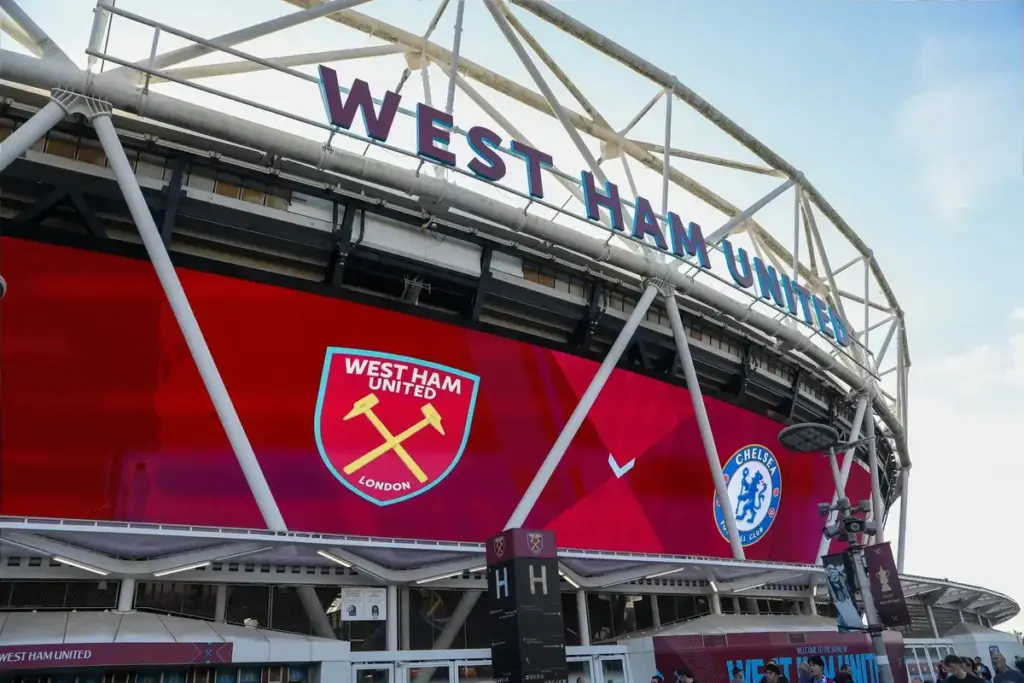

West Ham begin their first season outside the top flight in 14 years this month, and the coverage that follows them down changes shape with them.
Championship football does not get the wall-to-wall broadcast and national-newspaper treatment the Premier League enjoys, which is why a growing number of supporters now lean on betting platforms for fixtures, live scores, form tables and match data, and why it is worth knowing which of those platforms are any good at it.
That shift has quietly turned bookmaker sites into a second data layer alongside the traditional outlets, and the quality varies enormously between them. Comparison publishers such as TopEndSports now rank UK betting sites on things that can actually be measured: market depth counted on a reference fixture, the margin baked into the odds, how quickly in-play prices refresh, how long a withdrawal genuinely takes.
For a Hammers supporter chasing second-tier numbers rather than a bet, those rankings double as a rough guide to which platforms treat football coverage as a product rather than a shop window.
What changes for Hammers fans in the Championship
Relegation was confirmed on the final day of last season, when a 3-0 win over Leeds counted for nothing because Tottenham beat Everton to survive; the Premier League’s own report set out how a 39-point return still was not enough. Fourteen years in the top flight ended there.
What follows is a different rhythm entirely. Nuno Espirito Santo’s side face 46 league games rather than 38, three matches a week for long stretches, and a fixture list that opens away at Burnley on Sunday 16 August before Charlton visit London Stadium on 22 August.
Before any of that, Portsmouth arrive for a Carabao Cup first-round tie on Saturday 8 August, West Ham’s first appearance at that stage of the competition in 15 years. Millwall away at The Den on 19 September is already circled.
The practical problem is coverage. Far fewer of those 46 games get a live national broadcast slot, fewer still attract a travelling press pack, and the statistical furniture that surrounds Premier League football, from expected-goals feeds to minute-by-minute win probabilities, thins out noticeably one division down.
Supporters fill the gap wherever they can find it, and increasingly that means a bookmaker’s fixture hub.
What a top ranked UK sportsbook is actually measured on
The better comparison sites publish a rubric rather than a verdict. TopEndSports scores each bookmaker out of 100 across six weighted criteria, covering betting markets and depth, odds and margin, live betting, banking and payout speed, bonus value and site experience, with a minimum threshold a brand has to clear before it is listed at all.
Two of those criteria matter for anyone using a sportsbook as a data source rather than as a betting account. Market depth is a decent proxy for editorial effort: a platform carrying several hundred markets on a single fixture is maintaining genuine coverage of that competition, and thin second-tier depth usually signals that the league is an afterthought.
In-play refresh speed tells a similar story, because a live feed lagging the pictures by several seconds is no use whether you are betting or simply following the score.
Margin is the third number worth understanding. Football match-odds margins across the tested UK market cluster in the low single digits, and that figure shows how much of a price is operator cut rather than an estimate of what will happen.
Where market rankings and the league table diverge
Promotion markets are not predictions, and it is worth being clear about that before treating them as analysis. West Ham dropped into a division in which they are among the best-resourced clubs, and they are widely expected to compete near the top of it. The pre-season markets reflected that expectation; they did not create it, and they are not evidence for it.
The mechanics are less neutral than they look, too. Convert every price in a market into an implied probability and the total comes to more than 100 per cent.
That excess, the overround, is the operator’s margin, and it quietly inflates every individual number on the board. A price is a crowd estimate with a fee attached rather than a forecast, which is why it belongs alongside the table rather than in place of it. Our fixtures and results page remains the unvarnished version.
There is a second wrinkle worth carrying around. Independent testing has found groups of separately branded UK sportsbooks running on a single operator licence and a shared odds feed, pricing the same fixture within a whisker of one another at the same second. Six apparently independent opinions can turn out to be one.
The regulatory backdrop to 2026/27
This is the first season in which no Premier League club runs out with a gambling brand across the front of its shirt, the end point of a voluntary agreement the clubs reached in 2023.
West Ham were among the eight top-flight sides carrying a betting front-of-shirt sponsor when that vote was taken, so the change would have reached the London Stadium kit this summer whatever division the club had ended up in.
The EFL sits under a different arrangement, and the government has since gone further, consulting on whether to bar operators without a Gambling Commission licence from sponsoring British sports clubs at all.
Whatever lands, the distinction that matters for supporters is between licensed operators, bound by Commission rules on segregating customer funds and offering player-protection tools, and unlicensed platforms sitting outside that framework.
How to check a ranking before you trust it
Five things separate a tested ranking from a rewritten press release:
- The licence. Every legitimate UK operator holds a Gambling Commission account number, and it can be checked against the public register in under a minute.
- The date. Rankings age badly. Look for a stated testing window rather than a vague claim that the page was updated this year.
- The method. A published rubric with visible weightings beats a top-ten list with no reasoning attached to it.
- The disclosure. Comparison sites earn commission from the operators they link to, and the credible ones say so on the page rather than in a footer.
- The overlap. Check whether brands presented as separate choices share a licence number and a pricing feed.
Two UK-specific points are worth keeping in mind alongside that list. Credit cards have been banned for gambling in Britain since April 2020, so any site offering one is not operating under a UK licence, and Commission-licensed operators do not accept cryptocurrency either.
Licensed remote operators are also required to integrate with GamStop, the national self-exclusion scheme, which is a useful and quick tell.
None of this turns a sportsbook into a substitute for a football desk. But with West Ham facing 46 games in a division that gets a fraction of the Premier League’s coverage, knowing which platforms actually maintain their second-tier data, and which simply resell someone else’s feed, is a small piece of practical housekeeping ahead of Saturday.

Comments.
Loading comments…