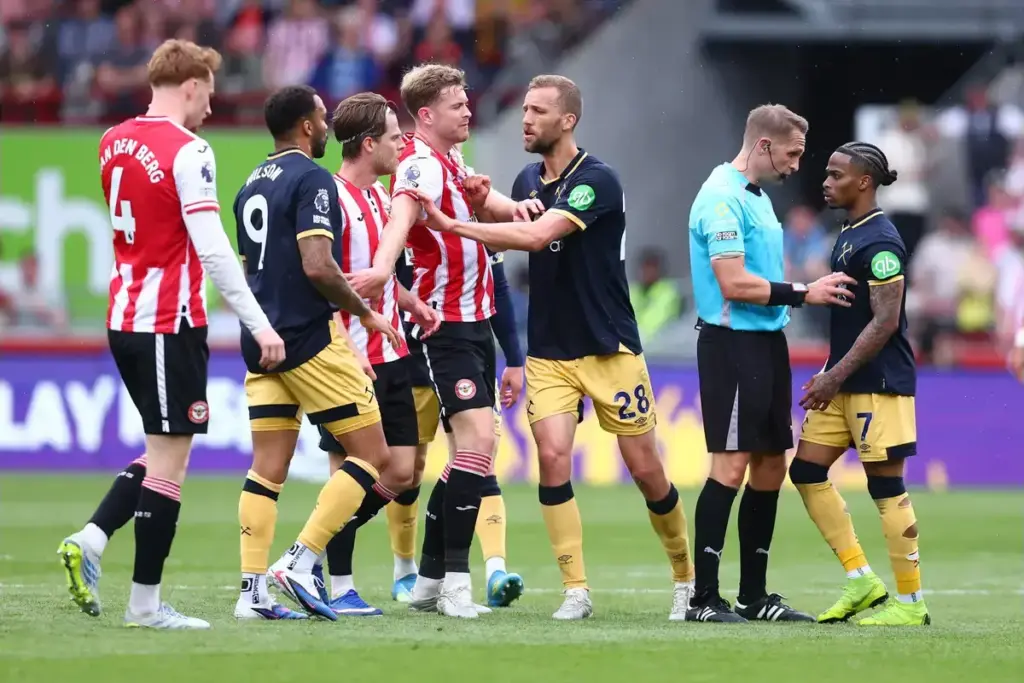

- West Ham United lost 3-0 against Brentford in the Premier League
- The league’s Key Match Incidents panel notes that West Ham should have been awarded two penalty kicks against Brentford
- The Hammers are in the relegation zone
The Premier League’s continuing VAR issue has brought West Ham United back into the limelight after disclosures from the league’s Key Match Incidents (KMI) panel about the contentious decisions in their match against Brentford a fortnight ago.
The Hammers‘ defeat at Gtech Community Stadium could be the difference between them being a Premier League or Championship side come the end of the month. With Tottenham Hotspur now two points above the relegation zone, Nuno Espírito Santo’s side had a chance to relieve pressure and move away from danger.
Brentford defeated West Ham 3-0, with Konstantinos Mavropanos’ bundled own goal setting the tone before Igor Thiago and Mikkel Damsgaard rounded up an awful afternoon for the visitors. However, according to the KMI, the result could have been much different.
Hammers denied two penalties at Brentford according to KMI
As reported by BBC Sport, the KMI panel notes that West Ham should have been awarded two penalty kicks against Brentford, but one of the rulings did not meet VAR standards.
The first incident shows Keane Lewis-Potter restraining Tomas Soucek “in a clear non-footballing action which impacted the West Ham player’s movement,” and the panel unanimously agreed that VAR Tony Harrington should have stepped in.
It was also argued that referee Craig Pawson should have directed the spot kick after Yehor Yarmolyuk tripped and took down Pablo inside the box. The five-member panel split their votes 3-2 for a penalty, but 4-1 against a VAR review.
A VAR-fueled unravelling for West Ham
The Brentford clash did not have the same dramatic VAR drama as the Arsenal affair the following week, but it did underscore a troubling pattern for the Hammers. West Ham have frequently found themselves on the wrong end of crucial decisions, whether through tight offside calls, penalty appeals, or subjective refereeing.
According to the data, Arsenal has been more involved with VAR than other clubs over the last two seasons, while other teams, like West Ham, have frequently questioned whether identical instances are treated proportionately.
Jarrod Bowen publicly challenged VAR’s consistency following Arsenal’s defeat, claiming that physical contact is judged differently depending on the scenario and the teams involved. His remarks resonated with a fan base that has become more dissatisfied with the system.
At the start of the week, chief refereeing officer Howard Webb defended the call on Match Officials Mic’d Up following the VAR audio release, claiming that officials had appropriately prioritised the foul from Pablo Felipe on Arsenal goalkeeper David Raya since it had the “most material impact” on the phase of play. However, the explanation has done nothing to reassure those who feel the process itself is flawed.
Furthermore, looking back on the defeat to Brentford, it seems West Ham’s season has become a series of “what if” scenarios.






Comments.
Loading comments…